
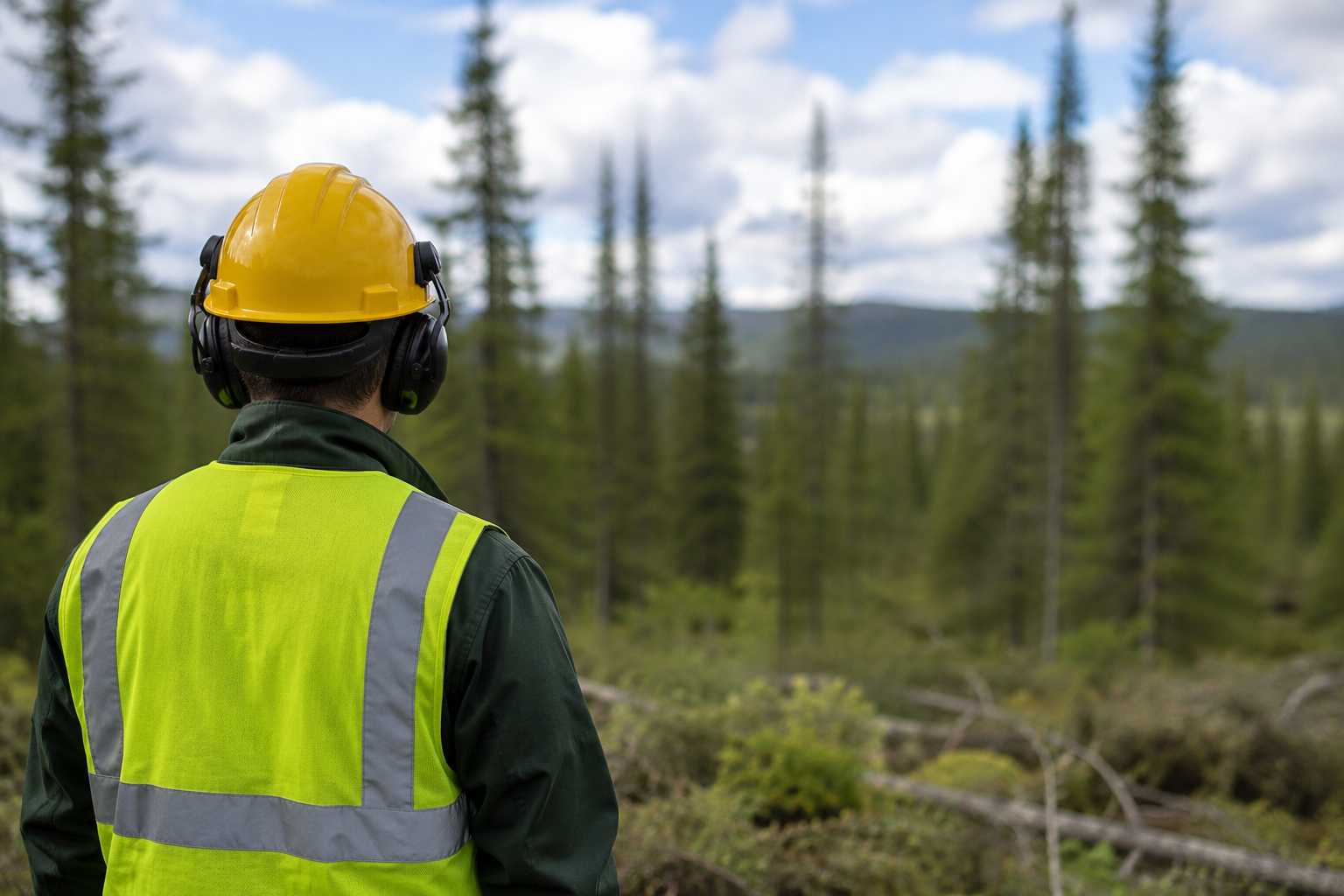
How to work safely outdoors
Whether working in a logging operation, a sawmill, or in a silviculture camp, forestry environments have unique hazards that require focused prevention and compliance efforts. Workplace Safety North (WSN) is drawing attention to the forest products sector as a high-risk industry with elevated potential for incidents from environmental hazards. Because these types of work are primarily conducted outdoors, forest products sectors face specific challenges that contribute significantly to the overall risk profile.
There are six types of hazards to be aware of in any work environment, including forestry operations:
- Safety hazards can lead to injuries from equipment (such as pinch points or vehicle/pedestrian interaction). Safety hazards also include energy hazards. These range from electric, diesel-powered, hydraulic, and pneumatic energy sources from equipment, to kinetic energy from moving objects (such as from trees being felled in a forest).
- Physical hazards stem from exposure to certain hazards, such as noise from operating machinery, vibration in mobile equipment cabs or from chainsaws, and radiation from working for long hours out in the sun. Temperature extremes – be they heat stress or cold stress – are other examples of physical hazards.
- Biological hazards are everywhere in an outdoor working environment. Common ones include animals and insects that can spread infection, either by carrying it on themselves or through their droppings. Allergens are another source of biological hazard, which accounted for one of the top three occupational illness sources for forest product operations in 2024.
- Chemical hazards are also important to recognize, and can stem from work with equipment fuels, as well as from lubricants and fuels meant to keep equipment maintained. Hardwood and softwood dusts are also important considerations, which have regulated exposure limits in health and safety legislation.
- Musculoskeletal disorder (MSD) hazards, leading to sprains, strains, and overexertion of the body, account year over year for nearly half of the lost-time injury claims submitted to the Workplace Safety and Insurance Board. Lifting and carrying heavy loads, repeating tasks without taking appropriate rest breaks, and maintaining awkward postures while performing work are common causes of MSD injuries.
- Psychosocial hazards include the potential for violence and harassment in the workplace, and prevention of these is mandated in Ontario health and safety legislation. Other psychosocial hazards include fatigue, workplace stress, and performing work while unfit for duty. Provincial risk assessment data noted substance use as the top risk in Ontario’s sawmills, while fatigue was found to be one of the top 10 risks in silviculture operations. Further, fatigue and substance use were identified as a top root cause for silviculturists, according to a focused root cause analysis on passenger vehicle driving hazards.
Staying safe out there
Remember these key safety best practices when working outdoors in a forest operation:
- Safety hazards: Whether responsible for felling trees with a chainsaw or operating harvesting equipment, make sure you keep aware of the environment. Do you know the safety protocols, and have you been trained to work at the task you’re completing? In addition to knowing how to do the work, are you wearing or using the right equipment?
- Physical hazards: When outdoors for long periods in hot or cold weather, is your workwear appropriate for the weather conditions? With the summer upon us, are you aware of the signs of heat stress, are you taking the time needed for appropriate breaks, and are you staying hydrated?
- Biological hazards: Do you know your company’s practices for safe work in environments where animals are present? Does your workplace have a wildlife reporting program to warn everyone of sightings? What practices are in place in the event of a tick bite or allergic reaction?
- Chemical hazards: Have you read and been trained on safe use of equipment fuels, lubricants, and other fluids? Do you use personal protective equipment when working with these substances? If working in a dust-enriched environment, are you aware of occupational exposure limits, and are appropriate measures in place (such as personal protective equipment or ventilation systems) to mitigate the hazards?
- MSD hazards: Are loads set to a maximum weight limit to avoid strain when carrying them? In cases where loads are over this limit, are there protocols (such as a buddy system/team lift) in place to share the load? Is there equipment available to assist with moving heavy loads, and if so, is it maintained and in good condition?
- Psychosocial hazards: What are your company’s fit for duty policies? Does your operation have a check-in policy for those who work alone? Do supervisors check in with workers to gauge general wellness, and are psychosocial hazards included in your company’s risk registry?
Work in forest products operations is demanding and carries its own series of hazards. Managing health and safety requires rigorous risk assessment, specialized training, and a shared responsibility across all workplace parties to ensure a strong health and safety culture.
Related
Forest Products Statistics – WSN
Find an Approved Forestry Trainer – WSN
Causes of Distracted Driving on the Job – WSN
Resources
Safe Chainsaw Use: Personal Protective Equipment Recommendations – WSN
Utilisation sécuritaire de la tronçonneuse : Équipement pour assurer la sécurité des opérateurs – WSN
Safe tree felling - The felling system: Don't rush the cut! – WSN
Defining and responding to critical injuries in the workplace – WSN
Forest Products – WSN
Top 10 Health and Safety Risks in Silviculture Sector – WSN
Top Occupational Disease Risks in Forestry Sector – WSN
Introduction to Professional Chainsaw Operation – WSN
Safe Driving on Forest Roads – WSN
Top Ten Logging Safety Risks – WSN
Struck by hazards are the Leading cause of fatalities in the forestry industry – WSN