
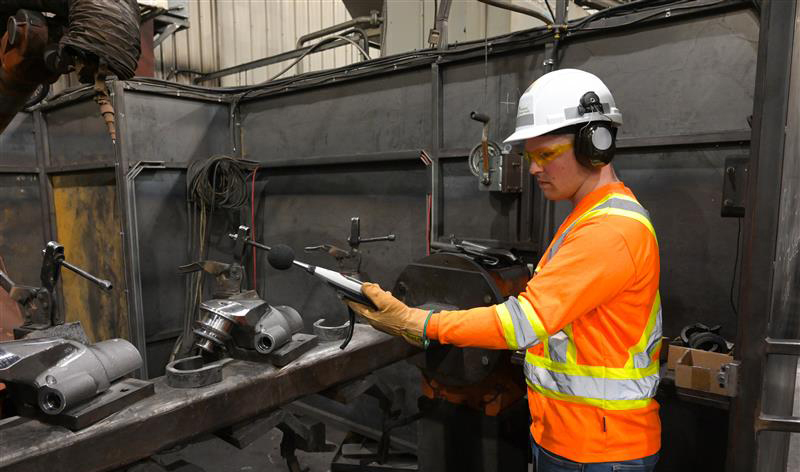
Graduated learning approach combines e-learning, workshops, and hands-on workplace experience
Workplace Safety North (WSN) is entering the second year of its Occupational Illness and Disease Prevention Research Project: a collaborative initiative aimed at strengthening workplace capacity to recognize, assess, and control occupational health hazards in the natural resources sectors.
The project is funded by the Workplace Safety and Insurance Board (WSIB) and conducted in partnership with the Institute for Work and Health (IWH), an independent Ontario-based research organization that mobilizes evidence to support safer and healthier workplaces.
As part of the $6.78 million investment over five years—announced in 2025 from the WSIB—this next phase focuses on practical implementation: equipping workplace participants with the knowledge, tools, and training needed to reduce harmful health exposures before they lead to illness.
Mining and forestry workplaces are now able to apply to participate this research initiative and receive access to free e-learning and workshops, as well as hands-on coaching and monitoring.
Year 2 of the project will expand participation across Ontario workplaces, continuing to apply a graduated learning approach designed to develop occupational hazard knowledge and practical assessment and control skills in natural resource sector firms.
Through a series of progressive learning stages—including e-learning modules, regional hands-on workshops, and workplace hazard assessments—participants will strengthen their ability to identify occupational health hazards such as diesel fume, silica, noise, and airborne contaminants.
“Each year, occupational health hazards impact the quality of life of workers in the natural resources sectors. Overall, these occupational health hazards contribute to more fatalities than other safety hazards and account for a large number of claims reported to the WSIB each year,” says Cindy Schiewek, Executive Director, Health and Safety Services at Workplace Safety North. “Expanding the skills to recognize, assess, and control these hazards is key to reducing short-term and long-term health effects for Ontario workers.”
Participants will begin their journey with modular e-learning courses covering occupational hygiene fundamentals and hazard-specific topics. Those interested in advancing further may apply to participate in regional workshops, followed by workplace activities focused on qualitative and quantitative hazard assessment and coaching.
E-learning series launching in April: Hazard awareness to protect Ontario workers
The Industrial Hygiene Fundamentals e-learning course in the first training all participants will take. The course provides insight into the principles of identifying, assessing, and controlling occupational health hazards. Learners will get an overview of common hazard recognition techniques, exposure monitoring concepts, and the hierarchy of controls to reduce risk in the workplace.
Participants can then select any of the following hazard-focused modules to gain more understanding of hygiene hazards relevant to them in their workplaces:
- Diesel fume exposure
- Respirable silica exposure
- Occupational noise exposure
- Wood dust exposure
These courses will be offered for free for anyone to take.
After taking the e-learning modules, qualifying participants interested in further developing their skills will be able to register for an Applied industrial hygiene fundamentals workshop to receive hands-on training on the use, calibration, and other practices related to equipment used to collect industrial hygiene samples of various airborne and physical hazards (registration space is limited).
Later, learners will be able to participate in practical hygiene assessments at their workplaces. Working alongside WSN specialists, participants will apply what they learned by conducting hazard inventories and exploring exposure monitoring techniques at their worksites. The workshop and hands-on components allow learners to move beyond theory, gaining practical experience with tools, sampling equipment, and hazard assessment methods that support stronger risk management of occupational health hazards.
Related
Occupational Disease | Workplace Safety North
Ontario Launches Canada’s First Occupational Exposure Registry to Protect Workers | Ontario Newsroom